
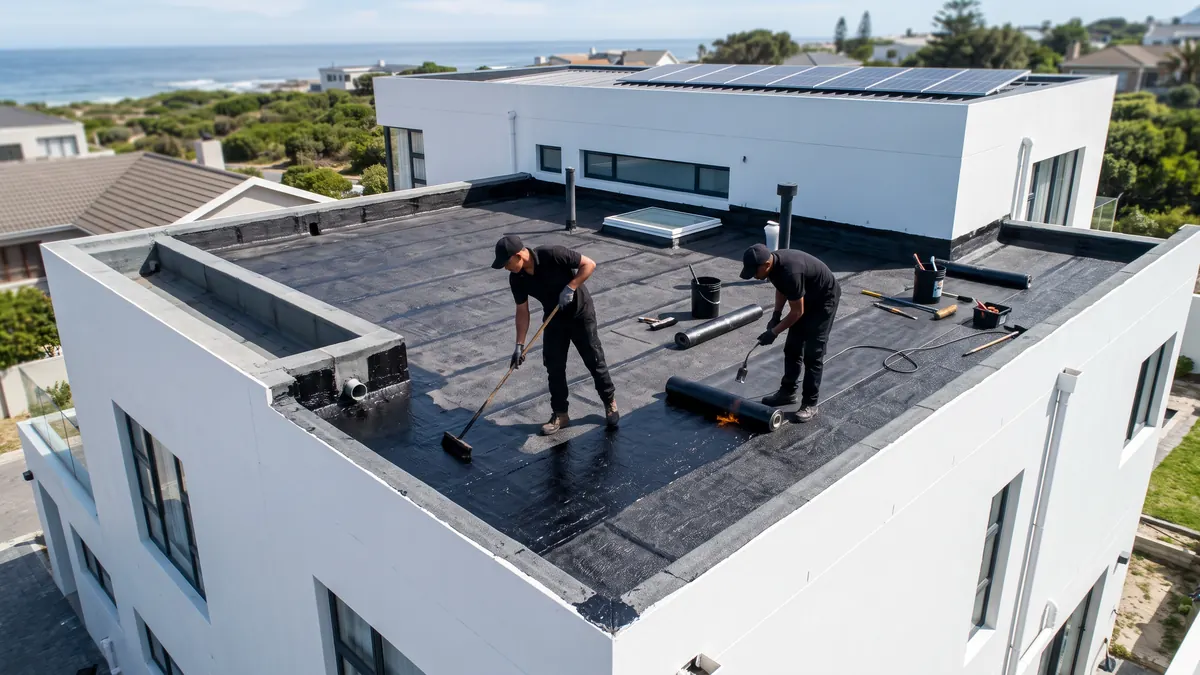
Acrylic Waterproofing in South Africa uses water-based acrylic coatings, reinforced with a fibre membrane, to seal roofs, parapets and walls. Send one request and independent local waterproofing contractors reply with prices.
Give the surface type and size, and get acrylic waterproofing quotes.
Get Waterproofing QuotesHow an Acrylic System Works
- Primer. Helps the coating bond to the substrate.
- First coat. Wet acrylic is brushed or rolled on.
- Fibre membrane. Polyester or fibreglass fabric is bedded into the wet coat.
- Top coats. Two or more coats build thickness and seal the fabric.
- UV-reflective finish. Light colours reflect heat and protect the system.
Where Acrylic Fits
- Concrete roofs with good falls. Where water drains and does not pond.
- Parapets, walls and copings. Vertical and detailed areas that are hard to torch.
- Metal and fibre cement roofs. At laps, screws and flashings, or as a full coat.
- Areas near timber. No open flame needed.
Acrylic is not ideal where water ponds for long, or under heavy foot traffic.
Signs a Roof May Suit Acrylic
- Hairline cracks in a concrete slab.
- Leaks at parapets, flashings or laps.
- An older acrylic system that is chalky or thin.
- A roof that gets very hot in summer.
Acrylic Waterproofing Prices
Ballpark prices so you can sanity-check a quotation.
| Item | Ballpark price |
|---|---|
| Acrylic system with fibre membrane | R120 - R280 per m² |
| Acrylic recoat of a sound system | R60 - R140 per m² |
| Surface preparation and priming | R30 - R60 per m² |
| Strip failed coating | R40 - R90 per m² |
| Scaffolding or access | R5,000 - R15,000 |
Prices JUST UPDATED. Indicative ballpark figures in rand, rounded, including labour unless stated. They are not our prices or quotations, and no contractor is bound by them. Confirm VAT, access costs, the product system and what each quotation includes.
Get prices for your property rather than a range. Send one request and see who replies.
Get Waterproofing QuotesWhat Affects the Quote
- Number of coats. More coats mean more material and labour.
- Membrane coverage. Full fabric costs more than strips at joints only.
- Surface condition. Cracks, loose coatings and moss need work first.
- Area and access. Small or high areas cost more per m².
Application and Curing
- Inspection. The contractor checks falls, cracks and the existing finish.
- Preparation. Cleaning, crack repair and primer.
- Membrane layer. Fabric bedded in the first coat.
- Build coats. Each coat dries before the next.
- Final check. Laps, edges and details are checked.
Acrylic needs dry weather and must not be rained on before it cures, usually within a day per coat.
Preparation and Disruption
- Weather. Work stops when rain is forecast.
- Disruption. Low smell and noise. Expect a few days for coats to dry.
- Access. Keep people off the roof while coats cure.
Maintenance and Questions to Ask
- Recoating. Most acrylic systems need a recoat every 3 to 5 years.
- Check. Look for chalking, cracks and bare fabric after summer.
Ask contractors how many coats and what dry thickness they will apply, whether fabric covers the full roof, and how they will handle ponding areas.
Acrylic Waterproofing FAQs
Is acrylic as good as torch-on?
It depends on the roof. Acrylic suits detailed and well-drained areas. Torch-on handles flat roofs with more water better.
How long does acrylic waterproofing last?
Usually 3 to 5 years before a recoat, longer with good maintenance.
Can acrylic go over torch-on?
Some systems can, with the right primer. Ask the contractor to confirm compatibility.
Can acrylic be applied in winter?
Yes, in dry weather above the product's minimum temperature. Rain before curing will wash it off.
Related Services
Get acrylic quotes through Waterproofing South Africa and check the number of coats and membrane coverage.
Waterproofing South Africa is a quote and referral service. We do not carry out waterproofing work and we do not employ contractors. Work is quoted and carried out by independent local contractors, and your agreement is with the one you choose. The right system depends on an inspection and the cause of the water ingress. Ask for a written quotation, the product system and the guarantee terms before you pay a deposit.
Acrylic Waterproofing. Describe what you need once and get the best quote, fast.
Get Waterproofing QuotesGet the Best Quote, Fast
Keep it brief. Say what is leaking or damp, the type of surface and your suburb. Your enquiry is passed only to contractors suited to the job, and you decide whether to go ahead.
Client Reviews
Powered by leaderr